In general and the most important rule anywhere: look around you and watch what others do and how others behave and follow them. By this way it is very unlikely that you do something “wrong”. Remember, the main purpose of an onsen is to relax.
Most onsen, around 70%, have a tattoo ban, so verify upfront if the onsen permits the entry with tattoos. If your tattoo is small enough you could cover it with a bandage. You can filter “Tattoo-friendly” in the “Best-Of-Onsen” section in this website.
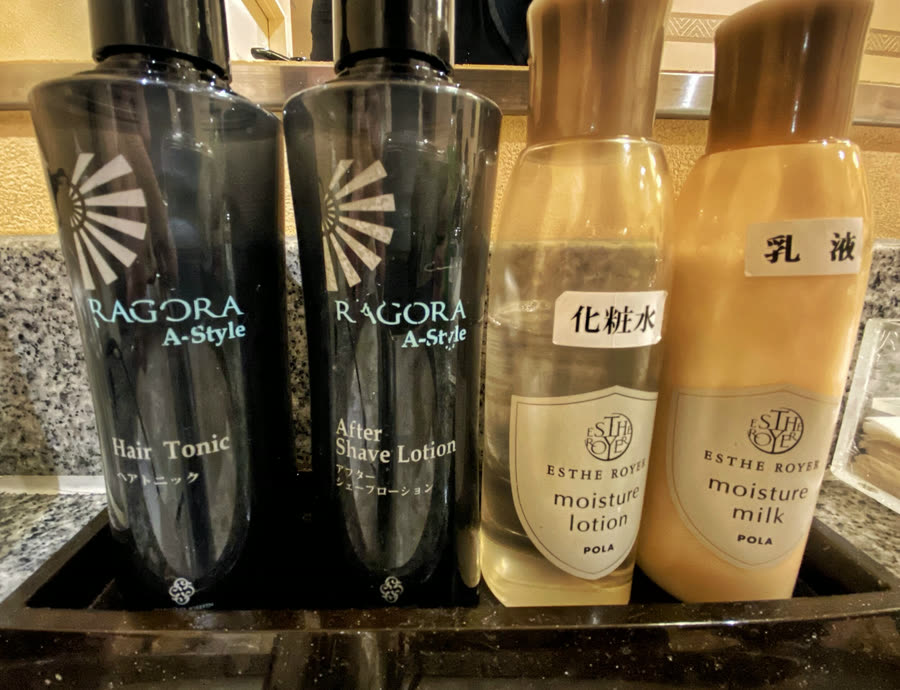
Some onsen do not provide toiletries and also the quality can vary. If you want to be on the safe side, pack your own. Within the onsen there are often shelves where you can place your bag.
At the bottom of the page you will find a visual step-by-step explanation.
Make sure your physical condition is suitable for onsen with its hot water and there are no open wounds. For women please take caution during your menstrual cycle and consult a doctor if you have questions.
Do not show up drunk.
In short for first-time users:
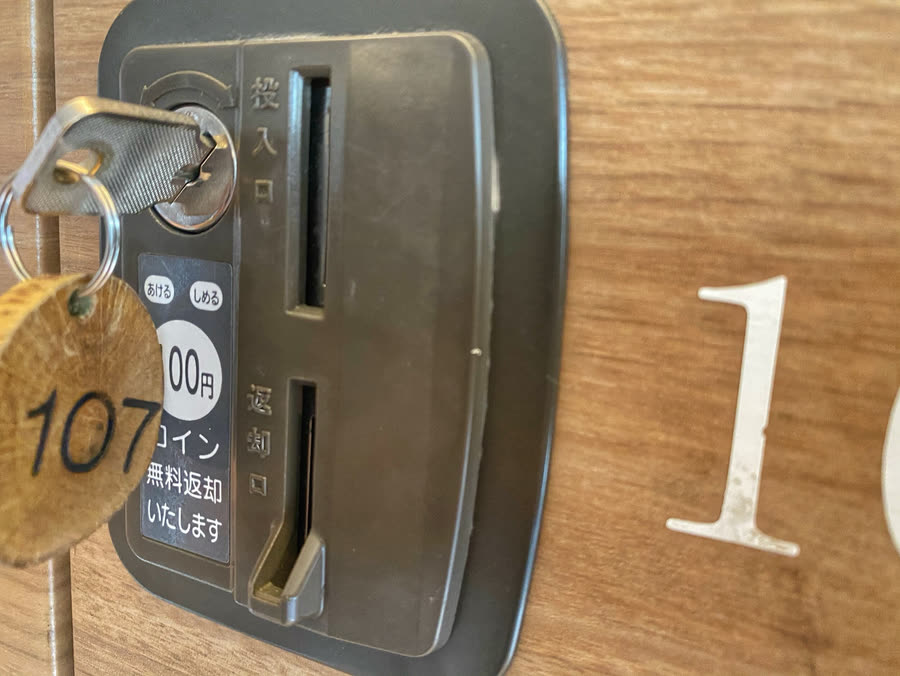
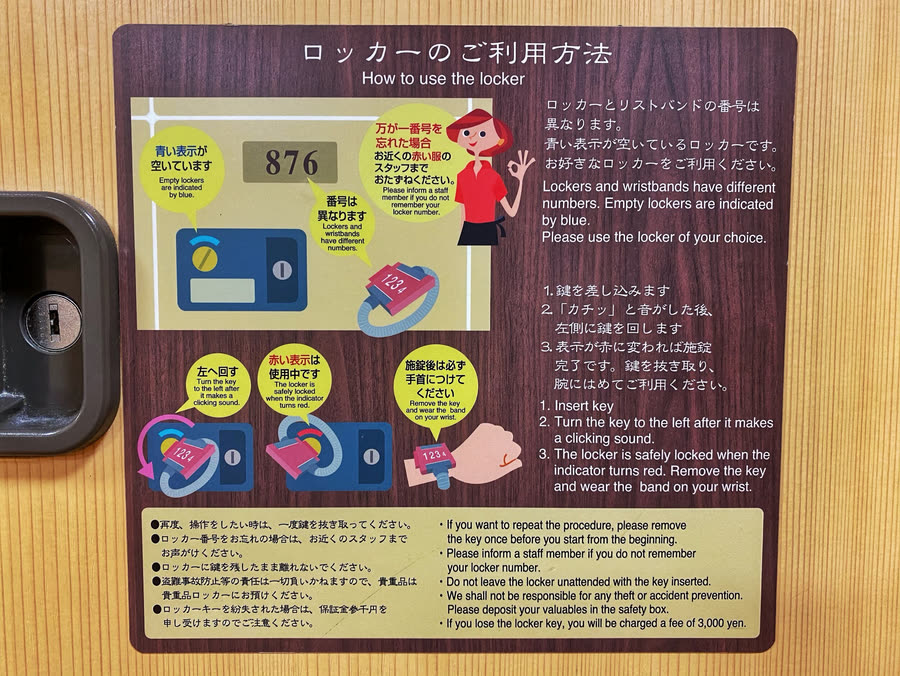
Take off your shoes immediately at the entrance, before stepping on the wooden floor of the onsen, put them into the shoe locker and take the key with you. Sometimes a 100 Yen Coin is needed for the locker and refund when leaving.
Either purchase an admission ticket or coupon ticket from a machine and proceed to the front desk or others have a payment counter only. Again others can hand you a key with a code (or chip) with which you “pay” everything throughout the onsen/spa and you pay your bill when exiting the facility at a machine or counter. Optional: purchase a rental package (towels, shampoo, body wash, razors ) in case you came empty-handed and the facility doesn’t provide it. In some onsen there isn’t any shampoo and body wash provided.
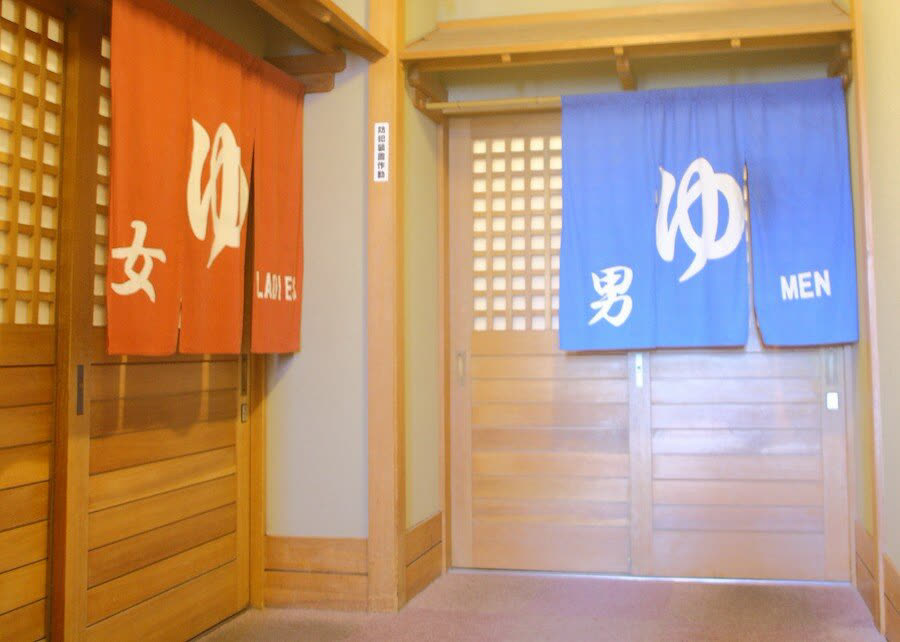
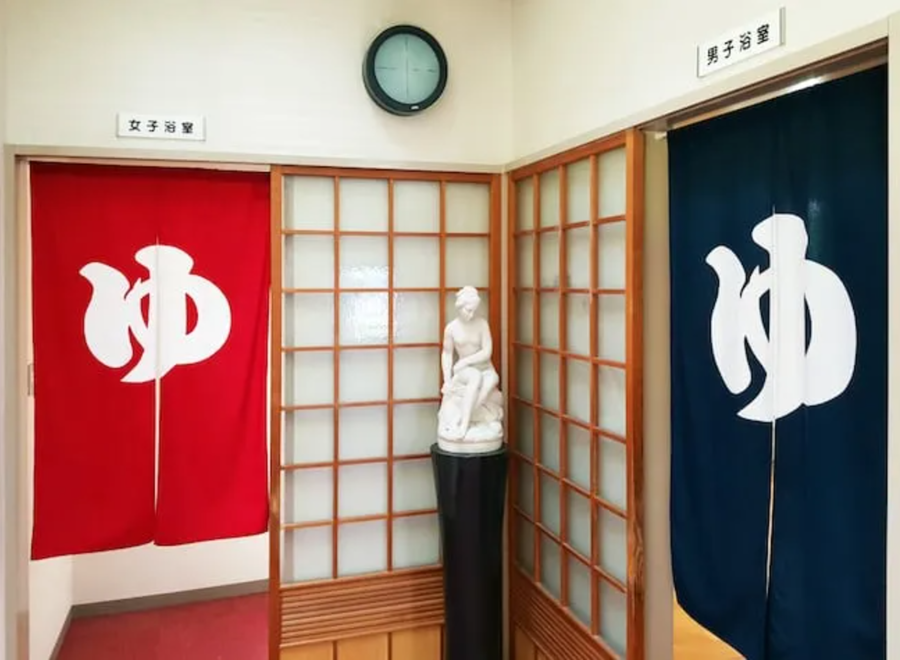
Handover the ticket(s) and take whatever the clerk gives you e.g. key for the locker in the changing room, and/or sauna wrist band, towels, and proceed to the changing room (bluish curtain male, reddish curtain female).
Take off all your cloth (go naked! no swim suit!) and leave all your belongings in the dressing room.
DO NOT use your phone or camera in the locker room or bathing area.
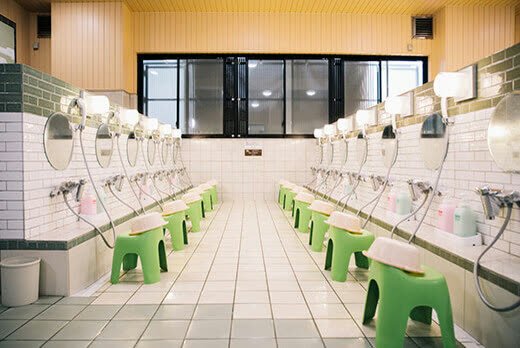
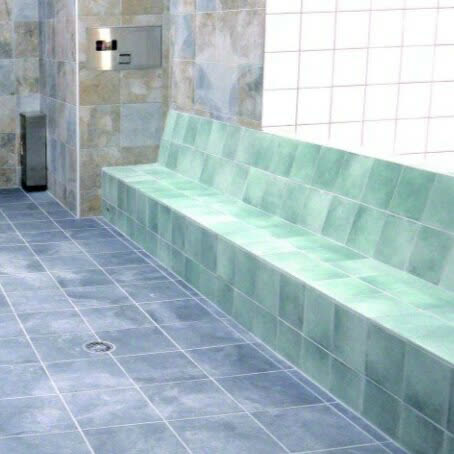
Enter the bathroom with its seated shower stations. Don’t forget your small towel for washing and covering your modesty while walking around. This can also help to make you feel less uncomfortable as everybody is naked .
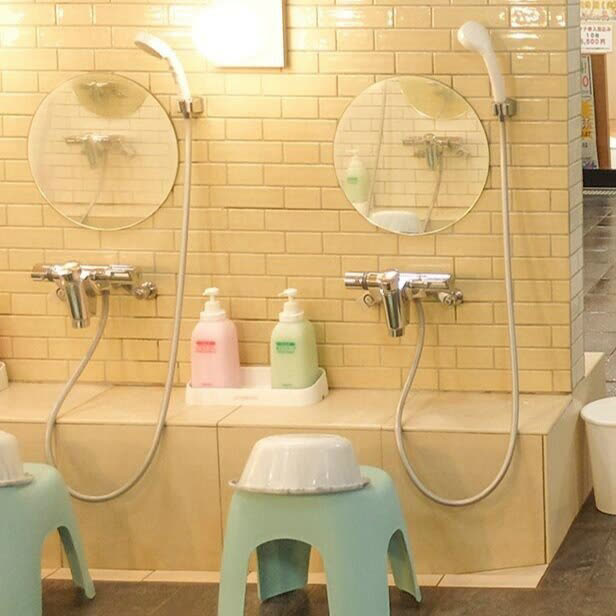
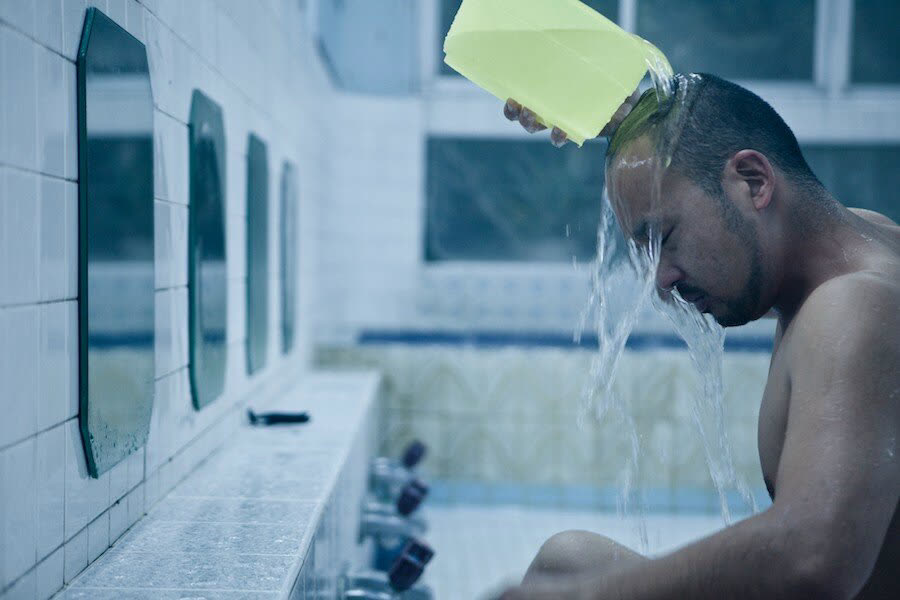
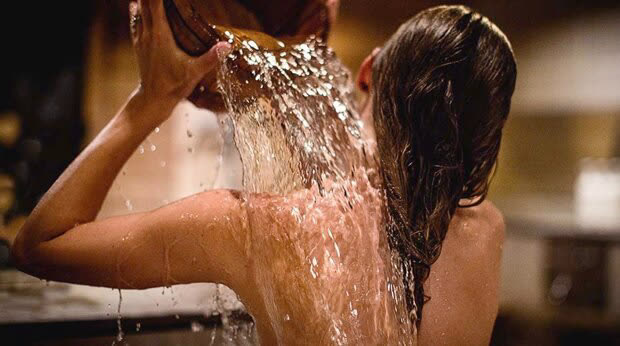
Take a wash basin/bowel and a stool/chair, rinse the chair with water, sit down and wash yourself from head-to-toe. This practice of washing off thoroughly before entering the onsen is called kaisei-yu. It's THE rule of the Japanese bathing that you definitely don't want to violate. Use lots of soap foam! Avoid splashing waters on others.
For the ladies: remove makeup and jewelry. Tie your hair up before entering the bath if you have long hair as it should never touch the water in the bath.
Applying hot water before entering the bath avoids that your blood vessels suddenly expand when entering the bath.
After your shower, rinse off your stool and shower area and place everything where you took it from. Make sure to rinse your towel clean as well.
Now you’re finally ready to enter for the baths! Relax in the hot baths and don’t rinse off after you bathe or you will lose the benefits of the minerals on your skin. Temperatures and water vary in each bath.
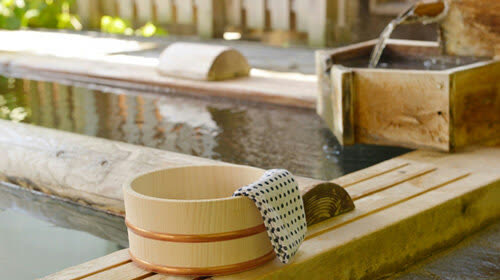
Don’t let your towel touch the water. Most people fold up their towels and place them on their heads while they bathe or place them outside the bath near to them (e.g. on a stone). Use your towel for modesty when walking or in the sauna. No running, no swimming, no diving. No drunk person nor glass inside the bath area.
Dry yourself before entering the dressing room. Optional, wear your Yukata, a kind of Kimono (mainly in hotels or ryokans).
After the bathing enjoy the lounge area outside the changing room and which are not gender-segregated. Some onsen have also a restaurant. Drink enough water to replace the fluids lost during the bath. A typical post-onsen drink is fresh milk in a glass bottle.
Walk to your shoe locker, take your shoes and put them on after the wooden floor. Don’t forget your 100 Yen coin in case you used one.